// Mold Remediation
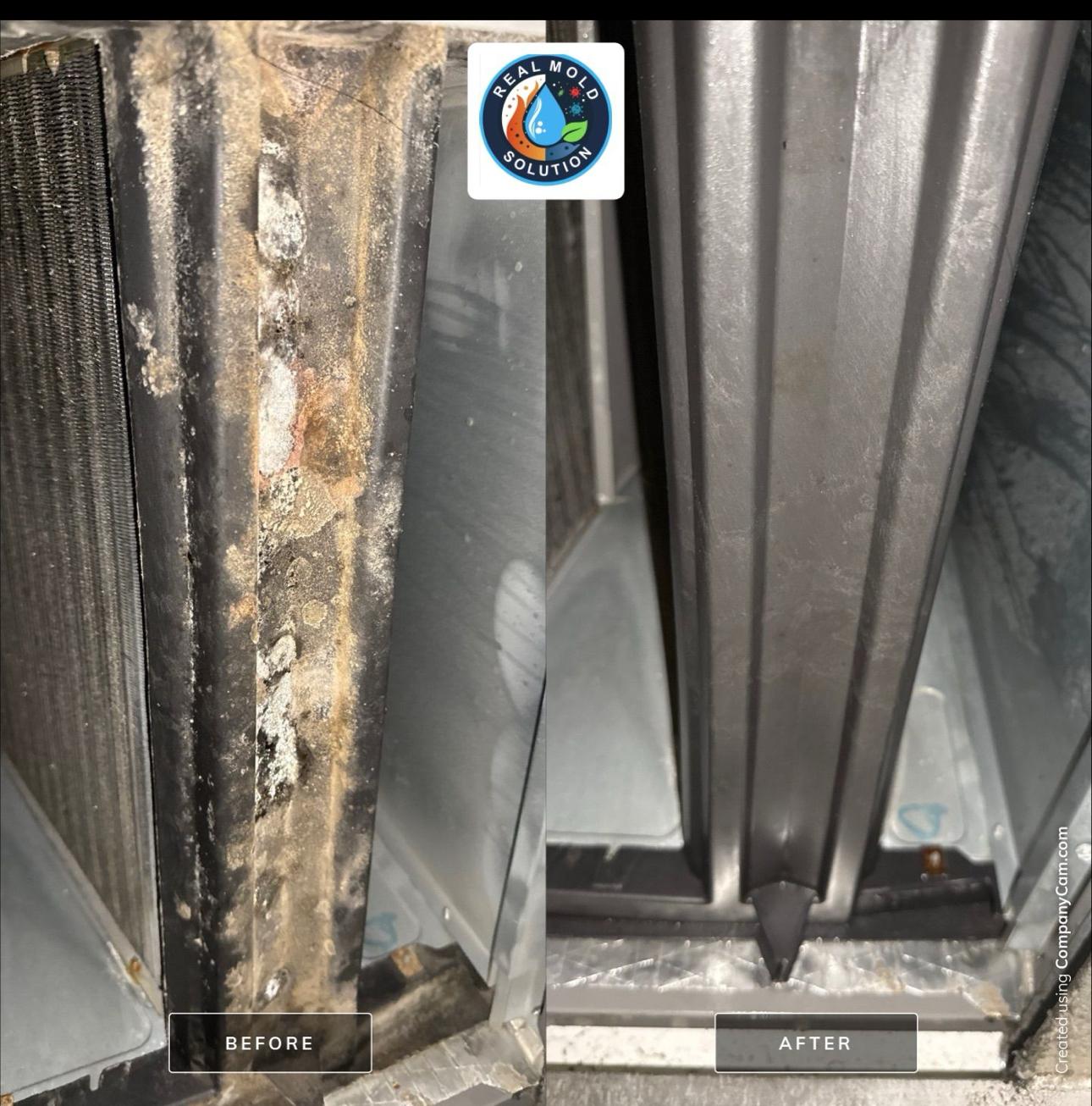
Field: HVAC air-handler interior disinfection · Orlando, FL
What 'EPA-approved' actually means in mold remediation, what products qualify, EPA RRP requirements, and what to ask any contractor. Orlando IICRC + EPA-certified.
Field: HVAC air-handler interior disinfection · Orlando, FL
You'll see "EPA-approved" on countless mold remediation websites. Most of those claims are inaccurate or misleading. The EPA does not certify mold remediation companies. The EPA regulates specific products and procedures. Here's what "EPA-approved" actually means and what to ask any contractor.
The EPA's authority over mold remediation comes through three specific channels:
The phrase "EPA-approved mold remediation" is technically inaccurate. The EPA approves PRODUCTS used in remediation. It does not approve REMEDIATORS. Real Mold Remediation uses only EPA-registered antimicrobials and is EPA RRP certified.
Before hiring any mold remediation company, ask these five questions:
The EPA publishes "Mold Remediation in Schools and Commercial Buildings" — a free PDF that establishes general best-practices for remediation:
This guidance forms the basis of the IICRC S520 Standard, which Real Mold Remediation follows on every job.
Florida requires mold remediators to hold a state license issued by the DBPR. Real Mold Remediation operates under Florida Mold Remediator license #MRSR4105 and Florida Mold Inspector license #MRSA3966. Always verify any contractor's state license number before signing.
Real Mold Remediation dispatches to 15+ Central Florida cities from our Orlando HQ and Kissimmee office. Same-day · IICRC certified · 1-year warranty.
The most common questions, answered straight. No legal hedging.
The EPA does not "approve" mold remediation services — only specific antimicrobial products are EPA-registered, not the broader remediation process itself. When companies advertise "EPA-approved mold remediation," they typically mean they use EPA-registered antimicrobials (which is industry-standard, not differentiating). The EPA publishes guidance documents recommending the IICRC S520 standard as the proper protocol for mold remediation, but doesn't certify companies. Florida-specific licensure (MRSR remediator + MRSA assessor) is what matters legally. EPA-registered antimicrobials kill surface mold within minutes but cannot address embedded contamination in porous materials — physical removal remains essential.
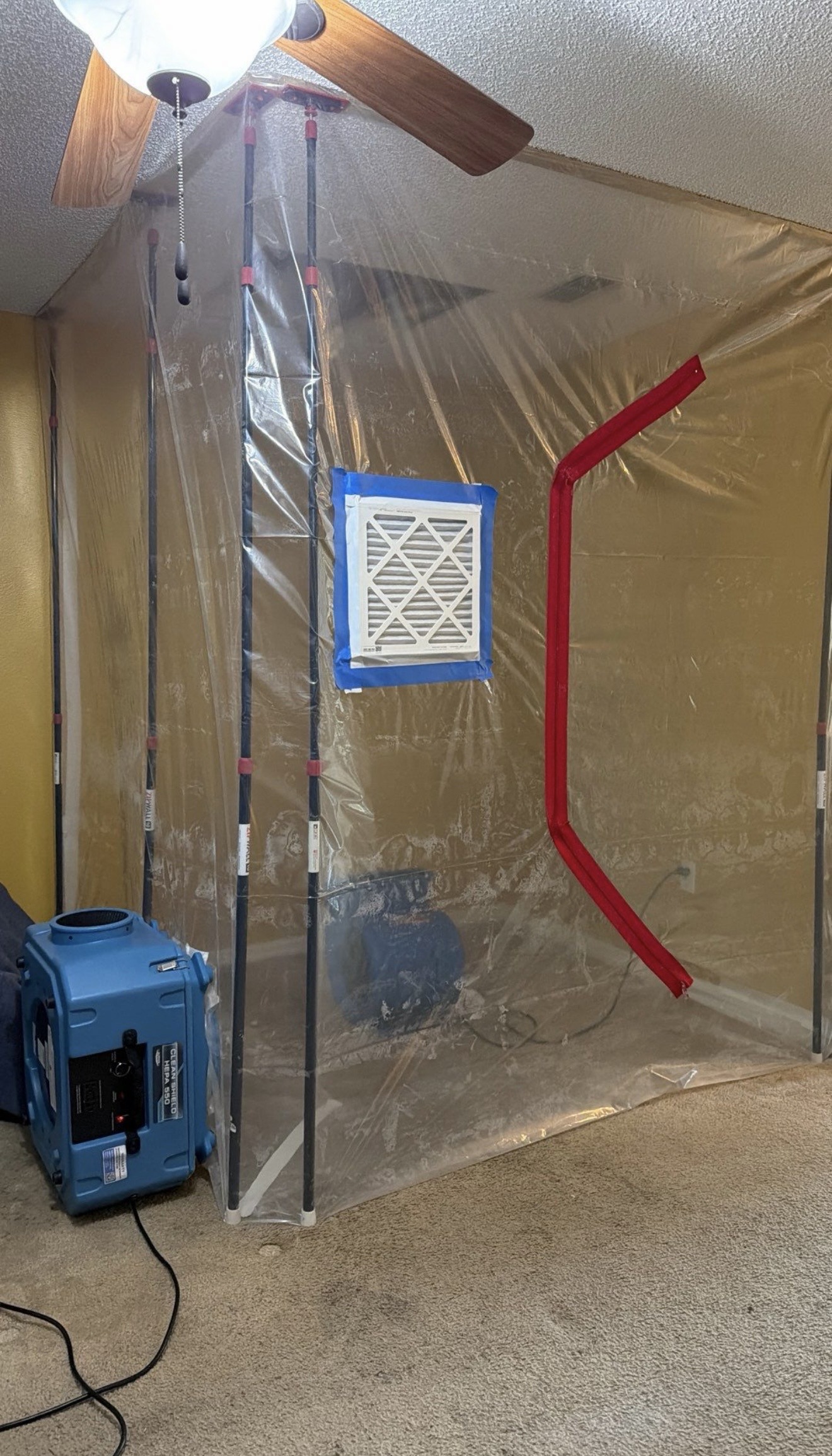
Real mold remediation in Florida follows IICRC S520 (Standard for Professional Mold Remediation) as the authoritative protocol. IICRC S520 requires: identification and elimination of moisture source, negative-air HEPA containment, full PPE for crew, physical removal of porous contaminated materials, HEPA-vacuum and damp-wipe of structural surfaces, EPA-registered antimicrobial application, structural drying under monitored humidity, and post-remediation AIHA-accredited lab clearance verification. For water damage triggering mold, IICRC S500 applies. For toxic Stachybotrys, Category III protocol within S520 applies with stricter PPE and mandatory clearance testing. We are IICRC-certified across all relevant standards.
EPA does not directly certify mold remediation companies. EPA RRP (Renovation, Repair, and Painting) certification is a separate program for lead-paint disturbance in pre-1978 properties — distinct from mold remediation but often relevant when mold work in historic homes intersects with lead paint. EPA publishes the "Mold Remediation in Schools and Commercial Buildings" guidance document recommending IICRC S520 as the proper protocol. Florida company-level certification comes from DBPR licensure (MRSR for remediators, MRSA for assessors). When evaluating mold companies, verify Florida MRSR license at myfloridalicense.com — that's the legally meaningful credential, not vague "EPA-approved" marketing claims.
Five verification questions for Florida mold companies: (1) "What is your Florida MRSR license number?" — verify at myfloridalicense.com via DBPR. (2) "Do you use a separate MRSA-licensed assessor?" — Florida law requires assessor and remediator be different licensees. (3) "Will I receive AIHA-accredited lab clearance after remediation?" — required for insurance and warranty validity. (4) "Are your technicians W-2 employees or subcontractors?" — W-2 indicates better quality control and insurance coverage. (5) "Can you provide a Certificate of Insurance showing $2M GL coverage?" — minimum standard for commercial work, indicates financial responsibility. Real companies answer all five directly; sketchy ones evade.
The EPA does not register or certify mold remediation companies — Florida licensure (MRSR for remediators, MRSA for assessors) via the Department of Business and Professional Regulation (DBPR) is the legally required credential. EPA registration applies only to specific antimicrobial products used during remediation, not to the companies themselves. When companies advertise "EPA-registered" status, they typically mean their products are EPA-registered (which is standard, not differentiating). For Central Florida customers, verify company credentials at myfloridalicense.com using the MRSR license number — that's the credential courts, insurance carriers, and Florida real estate transactions actually recognize as legitimate.